
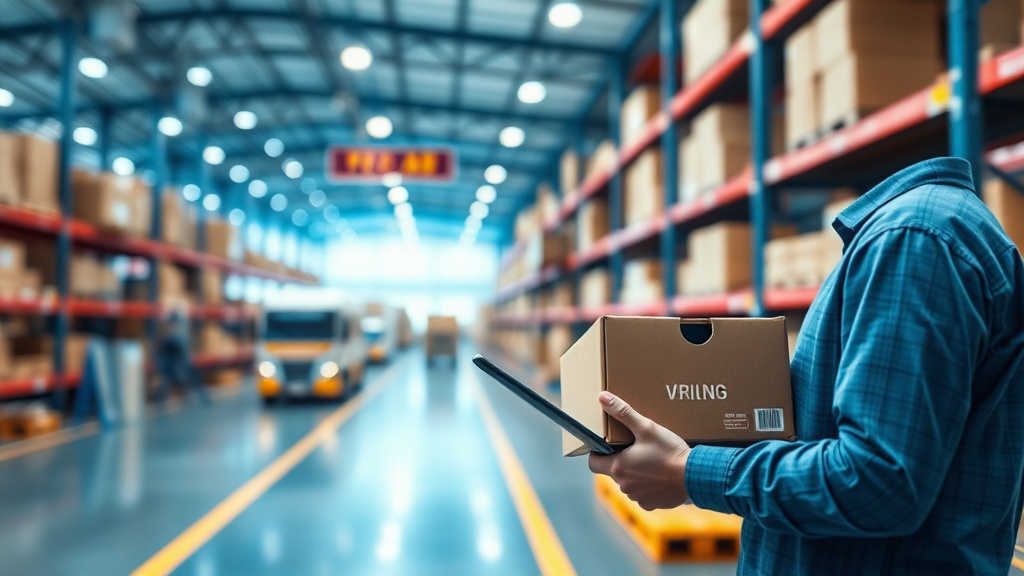
Supply chain interruptions cost businesses billions per year, yet innovative tech startups are reshaping this landscape through next-generation artificial intelligence solutions. From demand prediction that predict demand fluctuations to intelligent automation reducing operational bottlenecks, these companies are transforming how enterprises manage logistics, inventory, and distribution networks. This article analyzes how new startups leverage machine learning and advanced algorithms to improve visibility, decrease waste, and deliver unprecedented efficiency across international supply chains, ultimately transforming industry standards.
AI-Enhanced Visibility and Instant Tracking
Tech startups are reshaping inventory transparency through cutting-edge artificial intelligence that deliver never-before-seen insight across global supply chains. These intelligent platforms combine data from diverse channels—distribution hubs, delivery trucks, and logistics facilities—creating a full-scale instant overview of product movement. By employing advanced algorithms, companies can now monitor deliveries with exact precision, identify potential delays before they occur, and use insights for decision-making that reduce delays and improve performance across international distribution systems.
Live monitoring leveraging AI technology enables businesses to respond instantly to logistics irregularities and unforeseen challenges. When interruptions happen, AI-powered solutions instantly notify stakeholders and recommend corrective actions, decreasing response times significantly. This forward-thinking strategy converts reactive operations into strategic decision-making, enabling businesses to improve routing, shorten delivery periods, and enhance customer experience. The transparency gained via AI-powered insights creates competitive edges, allowing organizations to develop robust logistics networks able to withstand market volatility and unforeseen circumstances.
Predictive Analytics for Demand Forecasting
AI technology transforms demand forecasting by processing vast past data, market trends, and external variables to predict customer needs with remarkable accuracy. AI-powered systems uncover sophisticated patterns invisible to traditional forecasting methods, enabling businesses to prepare for seasonal variations, evolving customer demands, and changes in buyer preferences. These prediction tools permit companies to align production schedules with actual market demand, decreasing overstock situations and stockouts while improving inventory levels throughout the supply chain.
Startups leveraging predictive analytics allow enterprises to reach data-driven inventory decisions well ahead of time, substantially lowering carrying costs and waste. By accurately forecasting demand, companies reduce excess inventory that ties up capital and storage resources while preventing stockouts that damage customer relationships. This intelligent approach enables businesses to maintain optimal inventory levels, improve cash flow management, and boost profitability. The market edge gained through superior demand forecasting allows companies to react more quickly to market changes and maintain higher customer satisfaction rates.
Automatic Stock Management
AI-powered inventory optimization systems dynamically modify stock levels based on real-time demand signals, seasonal patterns, and supply chain dynamics. These smart systems analyze multiple variables simultaneously—supplier lead times, storage capacity, product shelf life, and sales velocity—to determine ideal reordering thresholds and quantities. By automating these intricate computations, startups eliminate manual errors and inefficiencies while ensuring businesses maintain appropriate inventory levels that combine product availability and cost efficiency, transforming inventory management into a dynamic, responsive operation.
Automated inventory optimization reduces carrying costs while improving stock availability, directly improving bottom-line profitability. Machine learning systems continuously learn from business data, improving suggestions and adapting to changing business conditions without manual intervention. This intelligent approach decreases waste from expired inventory, reduces storage expenses, and eliminates stockout losses from stockouts. Businesses adopting these systems realize marked improvements in stock rotation efficiency, cash flow management, and supply chain effectiveness, demonstrating how AI technology transforms traditional inventory management into a market differentiator.
Optimizing Supply Chain Efficiency and Savings
AI-Powered Path Planning
Artificial intelligence is revolutionizing logistics operations by processing vast datasets to establish optimal delivery routes in real-time. Startups leveraging machine learning algorithms can lower fuel consumption, decrease delivery times, and reduce vehicle wear and tear. These intelligent systems consider traffic patterns, weather conditions, and delivery priorities at the same time, enabling companies to attain significant cost savings while improving customer satisfaction through speedier, more reliable deliveries.
Advanced AI platforms progressively enhance by learning from past information and present circumstances, becoming progressively more reliable over time. By adopting these systems, enterprises have achieved transportation cost reductions of up to thirty percent. The technology also improves driver safety by pinpointing risky corridors and providing predictive maintenance alerts, preventing expensive breakdowns and prolonging vehicle lifespan across logistics operations.
Inventory Management and Sales Prediction
Machine learning algorithms excel at predicting demand patterns with strong accuracy, helping organizations to maintain optimal inventory levels. Startups are creating advanced prediction systems that review previous sales records, seasonal variations, and market signals to reduce overstocking and stockouts. This exactness decreases storage costs, cuts down on waste, and guarantees timely product delivery, substantially influencing profitability and operational efficiency.
Artificial intelligence-based inventory systems dynamically modify stock levels driven by predictive insights, reducing the need for manual oversight and human error. Businesses deploying these solutions experience improved cash flow, decreased warehouse expenses, and enhanced supply chain responsiveness. By eliminating excess inventory while sustaining delivery performance, businesses can free up resources toward growth initiatives while sustaining market position in increasingly dynamic markets.
Upcoming Opportunities and Market Influence
Developing Market Prospects
The artificial intelligence supply chain optimization market is positioned for exponential growth, with forecasts showing a compound annual growth rate surpassing 40% through 2030. Tech startups are capitalizing on this momentum by developing customized offerings targeting specific industries such as pharmaceuticals, food distribution, and electronics production. As enterprises increasingly recognize the competitive advantages of AI-powered optimization, capital flowing into these cutting-edge solutions remains strong, creating new possibilities for startups to scale globally and emerge as key players in supply chain transformation.
Key partnerships connecting startups and large enterprises are reshaping the competitive landscape, empowering smaller companies to reach wider market opportunities and resources. These joint ventures enable quick development iterations and actual application of advanced technologies, while traditional corporations gain advantages from agile development practices and cutting-edge solutions. The synergy between startup ingenuity and corporate infrastructure creates a powerful ecosystem accelerating supply chain modernization, in the end serving end consumers through enhanced product selection, lower prices, and superior service delivery in multiple markets.
Extended-Period Industry Overhaul
AI-powered supply chain solutions are fundamentally restructuring how organizations approach efficiency operations and risk management. By enabling maintenance prediction, dynamic routing, and autonomous decision-making, these technologies minimize manual mistakes while substantially enhancing speed of response to shifts in market demand. Startups driving these advancements set performance standards, forcing rival companies to adopt similar technologies or risk obsolescence, thereby hastening technology adoption across the complete logistics network internationally.
The combination of AI, blockchain, and Internet of Things technologies creates remarkable visibility and tracking capability throughout supply networks. Tech startups driving this transformation enable organizations to gain full end-to-end transparency, enhance sustainability practices, and ensure regulatory compliance with ease. As these solutions evolve and increase in accessibility, businesses across all sectors can utilize institutional-level insights traditionally limited to multinational corporations, democratizing supply chain excellence, and fostering a more resilient, responsive, and sustainable worldwide trade ecosystem.
