
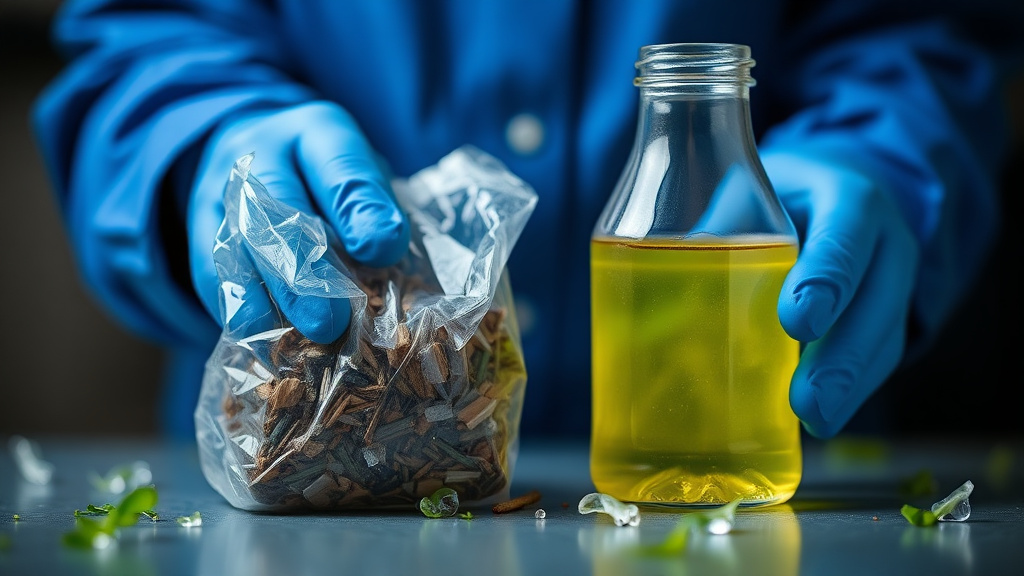
In a revolutionary advance for environmental protection, scientists have engineered a revolutionary plastic alternative using agricultural waste that would otherwise end up in landfills. This innovative material aims to address the worldwide plastic problem while transforming how we manage farming byproducts. Discover how researchers are converting crop residues into durable, biodegradable polymers that could reshape industries worldwide. Learn about the creation methodology, potential applications, and the ecological impact of this transformative technology that may finally offer a viable solution to our planet’s plastic pollution problem.
The Issue with Traditional Plastics
Conventional plastics have become an ecological emergency of unprecedented scale. Derived primarily from fossil fuels, standard plastic manufacturing plays a major role in greenhouse gas emissions and climate change. Once manufactured, these materials remain in our environment for centuries, fragmenting into microplastics that contaminate soil, bodies of water, and wildlife habitats. The worldwide plastic waste crisis has reached critical levels, with millions of tons building up in landfills and oceans each year, destroying natural environments and threatening human health through the food chain.
The economic and social costs of plastic dependency go well past ecological harm. Existing recycling systems falls short, with only a small portion of manufactured plastics being appropriately handled, while the bulk experiences burning or waste disposal. Manufacturing traditional plastics requires substantial energy resources and produces harmful chemical byproducts. Additionally, developing nations often shoulder the weight of wealthy countries’ plastic refuse, creating environmental injustice. This non-sustainable pattern demands innovative alternatives that can decrease our dependence on fossil fuel-derived plastics while tackling the growing global waste crisis.
Innovative Solution from Agricultural Waste
Researchers have successfully transformed agricultural byproducts such as corn cobs, straw residue, and bagasse fiber into a viable plastic alternative through sophisticated chemical methods. This novel strategy eliminates waste while creating sustainable materials that rival conventional plastic capabilities. The resulting biopolymer exhibits exceptional strength, flexibility, and durability, making it suitable for various industrial uses. By transforming farm residues into useful materials, this solution tackles two critical environmental challenges at the same time: decreasing landfill waste and decreasing reliance on petroleum-based plastics. This breakthrough marks an important milestone toward a circular economy in farming.
How the System Works
The process starts with collecting and preparing agricultural waste materials through cleaning and drying methods. Scientists then use advanced enzymatic and chemical processes to decompose cellulose and lignin components into smaller molecular units. These extracted polymers are subsequently purified and converted into pellets designed for manufacturing. Specialized catalysts accelerate the conversion process while preserving quality and consistency. The resulting biopolymer exhibits characteristics similar to standard plastics while retaining full biodegradability within several months.
Temperature and pressure controls are essential throughout the transformation process, ensuring ideal molecular restructuring. Researchers employ advanced spectroscopy and chromatography techniques to assess conversion efficiency and material composition. The technology requires minimal chemical additives, reducing environmental contamination risks significantly. Scaling assessments demonstrate that the process can be adapted for large-scale industrial production without compromising quality. This efficiency renders commercial viability highly feasible for agricultural regions worldwide.
- Enzyme-catalyzed hydrolysis converts cellulose into fermentable sugars effectively
- Catalytic agents accelerate polymer chain assembly and cross-linking reactions
- Temperature regulation maintains molecular integrity throughout processing
- Quality control systems ensure uniform material characteristics and performance
- Production byproducts from production are minimal with recyclable potential
Future Potential and Influence
The possible uses for this agricultural waste-based plastic reach well outside traditional packaging solutions. Industries ranging from vehicle manufacturing to electronic devices are investigating adoption opportunities. Preliminary estimates suggest broad acceptance could reduce international plastic waste by substantial volumes per year. Medical products, building materials, and fabric manufacturing represent further markets set to advantage. As output levels rise, manufacturing costs are anticipated to fall substantially, making this environmentally responsible choice economically competitive with traditional petroleum-based plastics in the next half-decade.
The environmental impact of bringing this technology to market cannot be overstated. By leveraging farm waste that currently decompose in fields or burn, releasing greenhouse gases, researchers estimate a significant decrease in carbon emissions. Farmers create new revenue sources from waste valorization, boosting agricultural communities. Biodegradability guarantees reduced landfill accumulation and marine contamination. Governments across the globe are currently developing regulatory frameworks to encourage widespread use. This major advance constitutes a paradigm shift toward sustainable resource cycles, demonstrating how scientific innovation can tackle at the same time dealing with waste, climate change, and economic development challenges globally.
